
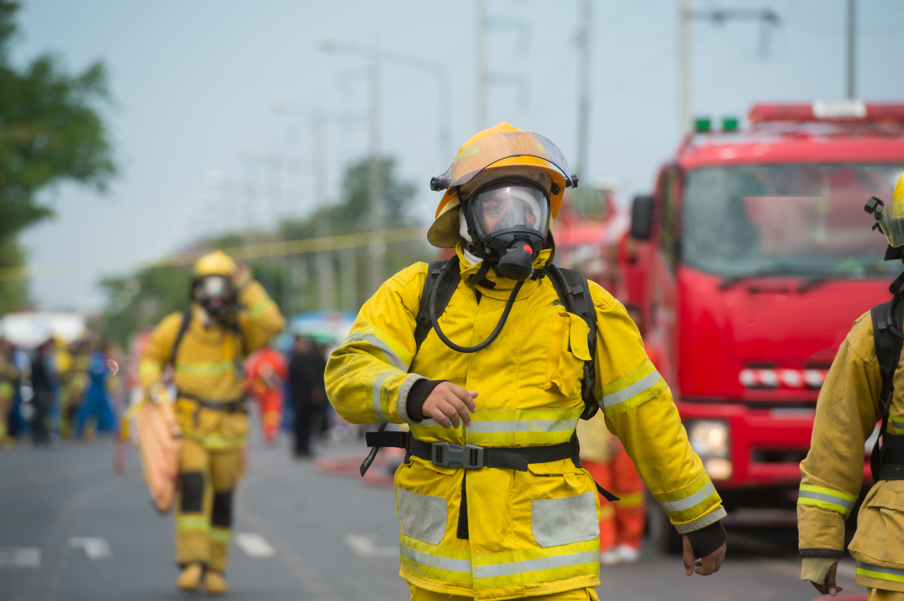
When a firefighter walks toward a burning structure, everything standing between skin and flame is the product of decades of trial, failure, and refinement. The gear looks bulky and uniform from the outside, but underneath that silhouette is a carefully engineered system of layers, each one built to handle a different threat. Heat, flame, water, chemicals, and physical impact all behave differently, and no single material can defend against all of them at once. That’s why protective clothing for firefighting is never just one piece of fabric, it’s a stack of specialized layers working together.
The Outer Shell
The outermost layer is the first line of defense against direct flame contact and radiant heat. It’s typically woven from tough, flame-resistant fibers designed to resist tearing, abrasion, and puncture while shrugging off sparks and embers. This layer also needs to survive rough handling, dragging hoses, crawling through debris, brushing against jagged metal or splintered wood. Durability matters here almost as much as heat resistance, because a shell that fails physically can expose the layers beneath it long before heat ever becomes the problem.
The Moisture Barrier
Just beneath the outer shell sits a layer most people never think about: the moisture barrier. Its job is deceptively complex. It has to keep water, steam, and hazardous liquids from soaking through to the skin, while still allowing some breathability so the wearer doesn’t overheat from the inside. Steam burns are a serious risk in firefighting, often more dangerous than people realize, because trapped moisture can turn to vapor against the skin in an instant. A good moisture barrier reduces that risk while also blocking exposure to chemicals, bodily fluids, and other contaminants encountered on scene.
The Thermal Liner
The innermost layer is the thermal liner, and it functions much like insulation in a winter coat, except it has to perform in conditions that would destroy ordinary insulation within seconds. This layer traps air to slow the transfer of heat toward the body, giving the wearer precious extra time in high-heat environments. It’s a delicate balance, too little insulation and heat passes through dangerously fast; too much and the firefighter risks heat exhaustion from their own body warmth being trapped inside the suit. Manufacturers spend enormous effort tuning this layer so it protects without becoming a liability in its own right.
Beyond the Coat and Pants
While the structural coat and trousers get most of the attention, a firefighter’s protection extends well beyond the torso. Helmets, hoods, gloves, and boots each have their own layered construction suited to the specific stresses they face. A hood has to protect the neck and face while remaining flexible enough for full range of motion and breathing. Boots need puncture-resistant soles along with insulation and waterproofing. Gloves must balance dexterity against thermal protection, too thick and the firefighter loses the fine motor control needed to operate tools and equipment. Every piece is a compromise between protection and usability, refined through real-world feedback from people who wear it under extreme pressure.
Why the System Matters More Than Any Single Piece
It’s tempting to think of firefighter gear as one product, but it’s really a coordinated system. Fire line equipment is only effective when every layer performs its role and integrates properly with the others, because a weak point anywhere in the chain can undermine the protection of the whole ensemble. A flawless outer shell paired with a compromised liner still leaves a firefighter vulnerable. This is why testing, inspection, and proper maintenance of gear are treated with such seriousness in the fire service, the system only works when every component is trusted to do its job.
The Human Factor
None of this technology matters if the person wearing it can’t move, see, breathe, or think clearly while doing their job. Designers have to constantly weigh protection against mobility, weight, and comfort, knowing that gear which is too heavy or restrictive can become dangerous in its own way by slowing reaction time or causing fatigue. The layers that protect firefighters represent an ongoing negotiation between safety and functionality, refined generation after generation based on lessons learned in real emergencies.
Understanding these layers offers a deeper appreciation for the complexity hidden inside something as ordinary-looking as a firefighter’s uniform. It’s not just clothing, it’s a carefully balanced shield, built one layer at a time to give someone the best possible chance when they step into danger.

